 Admin
Admin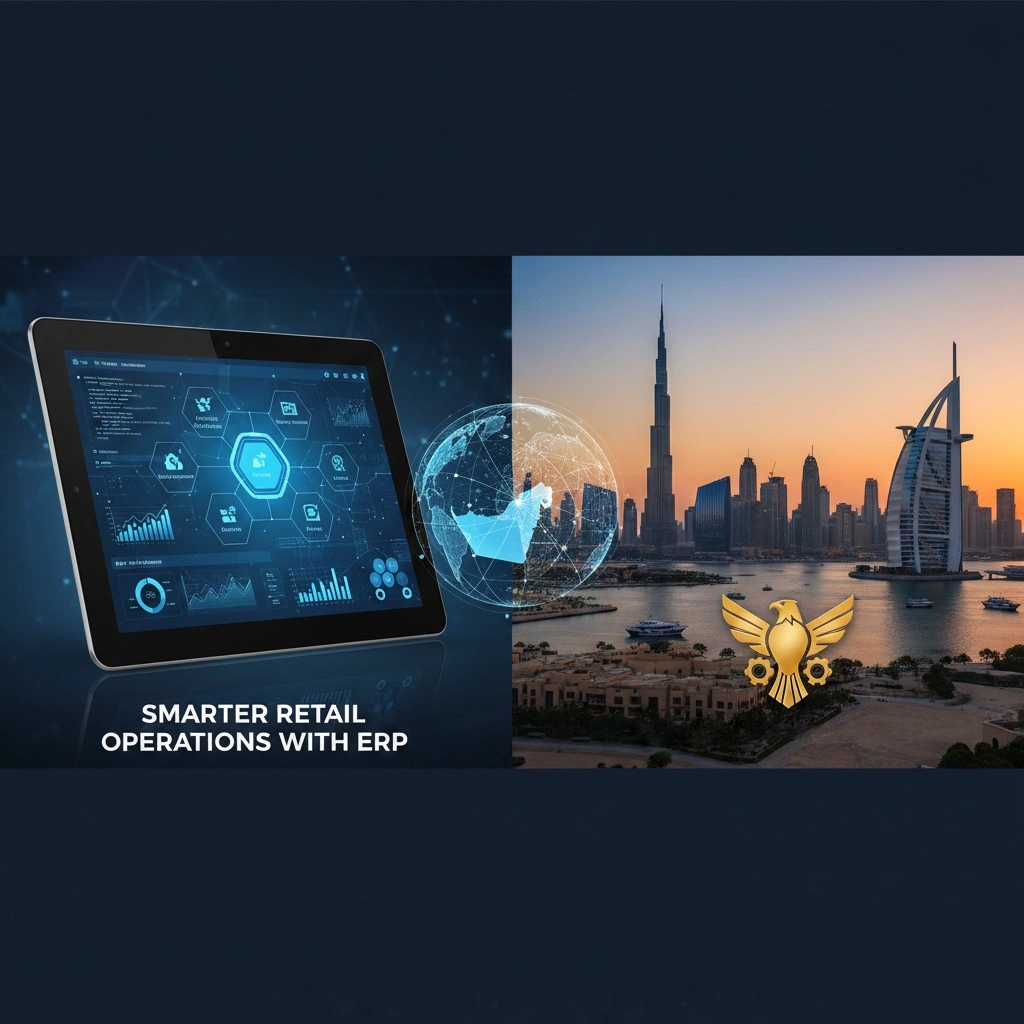
The modern retailing environment is characterized by an increasing pace of operations and a pressure on businesses to provide the customers with the smooth experience when organizing complicated operations in the UAE. Inventory management and sales monitoring to financial operations and customer interaction – all operations should be effectively functioning. This is ERP UAE comes in as a game-changer. It assists retailers in simplifying day to day business and enhancing decision making and smarter business management in all channels.
The Role of ERP in Retail
The retail operations are the central nervous system of the ERP software. It integrates different business functions such as sales, inventory and accounting and supply chain and customer service into one system. This integration guarantees that there is an easy flow of information between the departments hence minimizing the errors and delays. ERP systems assist retailers in the UAE that have high consumer expectations and consequently high level of competition.
An example here is that, rather than having to hire separate software to bill, manage stocks and do HR; an ERP system unites all this. Managers can get real time information, which can assist them in making improved decisions on pricing, promotion, or even revert stock.
Optimizing Inventory and Supply Chain.
Inventory control is among the largest retail problem. Overstocking leads to capital consumption, whereas understocking means the risk of loss of customers. The ERP software in UAE retail industry assists in the achievement of hitting the proper balance. It provides real time monitoring of stock level, auto reorder point and visibility of movement of all products across all stores and warehouses.
Also, CRM Software improves the efficiency of supply chain through facilitation of direct communication between businesses and suppliers and real time tracking of goods. This openness reduces delays and assists retailers to have consistent stocking of the product- this is one of the most important issues regarding customer satisfaction in the competitive market in the UAE.
Optimized Customer Experience.
The present-day ERP System are also developed so as to enhance customer relations. By using the built-in CRM modules, the retailers are able to monitor the purchase histories, preferences, and feedback to be able to develop personal marketing campaigns.
As UAE customers are growing more tech-savvy and requiring custom experiences, this kind of data-driven approach creates loyalty and motivates a repeat purchase.
Additionally, ERP will provide expedited payment, precise prices, and hassle-free point-of-sale services, enhancing the general experience in-store and online. It can be refund processing, discounts, loyalty points tracking, all of that can be handled through a single platform.
Financial Intelligence (Real-Time).
Another field where the ERP has a lot of value is financial management. Retailers are able to monitor revenues, expenses, and profitability on real time. Eliminating manual errors and time-saving automated accounting and reporting solutions, as well as in-built compliance features, ensure that the company complies with the UAE financial regulations.
ERP systems also streamline the management of taxes, and especially the VAT system of the UAE. Retailers are able to produce the right tax reports and save on the expensive errors. A clear financial picture will assist the owners of a business in making better plans, reducing unnecessary expenses, and predicting the further growth.
Giving Retailers Data Powers.
Information is strength in the vibrant retail industry of the UAE. ERP systems collect information in all operational locations, including sales and supply chain and transform it into actionable knowledge. The patterns that are unveiled by these analytics include high sales products, season-demand changes, and branches performing poorly. Retailers are then able to make proactive decisions unlike reactive ones. Predictive analytics also enable retailers to predict trends, plan marketing and optimize resources in advance with AI-driven ERP systems.
Conclusion
ERP software adoption in UAE retail industry is not merely about automation and it is also about transformation. It facilitates smarter, quicker and more interconnected retailing operations. ERP assists retailers remain competitive in the changing marketplace through streamlining of the back-office operations as well as improving the customer experience.
The need to invest in ERP is no longer negotiable in the case of businesses that wish to succeed in the current digital-first economy. The first step towards smarter retail operations is the proper technology and ERP is the pillar towards the long-term success in the UAE retail market.