
 Admin
Admin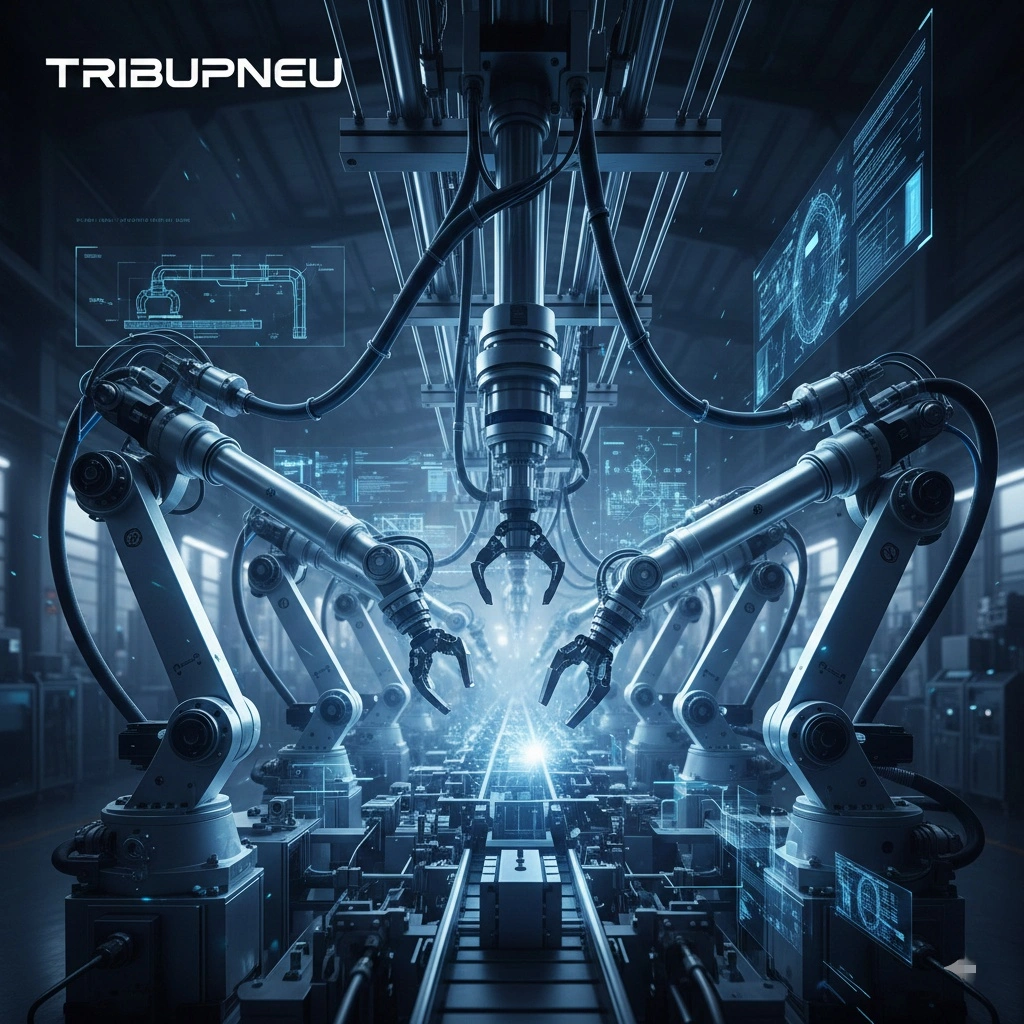
To remain on top in this rapid-changing technological world, it is necessary to understand the innovations that are changing the way the different sectors operate. Tribupneu is one such technology that is rapidly being adopted in different industries like healthcare and manufacturing. But what is this technology, and what is the reason for its importance?
Regardless of whether you are a businessman in the industry seeking ways to increase efficiency or just a person who is interested in new technologies, this all-inclusive guide will help you learn all about Tribupneu in an easy way.
What Is Tribupneu?
Tribupneu is a high-tech smart system that fuses intelligent control mechanisms with traditional pneumatic or mechanical operations. The technology at its center is a combination of real-time monitoring sensors, adaptive algorithms, and automated adjustments in order to optimize the performance of various applications.
You could visualize it as giving a “brain” to the classic systems. Unlike fixed-parameter based traditional equipment, Tribupneu constantly analyses the situation and does micro-adjustments to keep the efficiency at the highest level. This moving approach smartly cutting down energy waste, keeping equipment very little into the maintenance, and prolonging the lifespan of the equipment.
The tech has received a lot of praise for its multi-faceted uses. It has been used not only in industrial automation lines but also in specialized medical devices; the Tribupneu adaptable framework has been able to take user’s different operational needs without necessitating a complete system replacement.
How Tribupneu Technology Works
Grasping the mechanics behind Tribupneu enables to realize the reason for its great impact. The system consists of three components that are connected to each other and work together.
First, high-tech sensors keep an eye on the key performance indicators all the time. This includes the temperature changes, pressure levels, flow rates, and the timing of operations. These sensors send the data to the main processing unit at intervals of one millisecond, thus creating a real-time operational picture.
Secondly, smart algorithms take a look at the incoming data and compare it to the performance standards that are set. The system doesn’t merely react to the deviations; it can even see them coming. By detecting patterns and trends, Tribupneu is able to see the problems even before they occur.
Third, the mechanisms for making automated adjustments carry out the corrections instantly. This might involve changing the air pressure in a pneumatic line, altering the sequences of timing, or improving power consumption; all these changes are done without human interference and take place smoothly.
Every operation done in the closed-loop system is self-optimizing and becomes smarter with time. The use of machine learning enables the system to always have a more refined understanding of what “optimal” is for your particular application.
Key Benefits of Implementing Tribupneu
The organizations which have employed Tribupneu technology have claimed to get measurable benefits across various operational measurements. These benefits are the main reason why the adoption rate keeps increasing every year.
Among the different benefits of Tribupneu technology, energy efficiency is the most noticeable advantage. In the case of traditional systems, a huge amount of power is wasted as they operate inefficiently during the times when the demand is low. On the other hand, Tribupneu’s adaptive approach can cut down the power consumption by 20-40% as compared with the conventional systems, which means direct savings in operating costs.
The need for maintenance is decreased greatly. Predictive analytics will point out the components which are about to fail, thus allowing for planned maintenance instead of unplanned repairs. This preventive approach not only cuts down on the possibility of unexpected downtimes but also lengthens the lifetime of the equipment as a whole by avoiding cascade failures.
The quality of operations sees an enormous increase. Even though human operators are excellent at their job, they can never match the accuracy and consistency of automated systems that monitor conditions one thousand times each second. This leads to superior quality outputs, less waste due to defects, and more dependable production schedules.
The positive effects of Tribupneu on worker safety are also noteworthy. It reduces human contact with dangerous environments by doing the pressure control, gas monitoring, and cooling or heating operations. However, it still adheres to strict safety measures.
Real-World Applications Across Industries
Tribupneu’s multi-functionality has been proven by its use in all these sectors and even more, each of them has got its own operational benefits from the technology.
Precision assembly is done in the manufacturing plants, where timing and pressure are supposed to be within the tolerances. Automotive plants have reported a considerable improvement in painting quality due to the technology that keeps the spray pressure absolute, despite the temperature fluctuations occurring throughout the day.
The focus of healthcare applications is on breathing support machines and administering anesthesia. Giving the ability to very accurately control air mixture composition and delivery pressure depending on the real-time response data of the patient has not only improved outcomes but also reduced the number of adverse events in critical care areas.
The food industry is the biggest beneficiary of Tribupneu because of its clean design and precise control. The technology is used to ensure food safety and the quickest possible throughput whether by maintaining exact pressure for packaging or controlling pneumatic sorting systems.
Another area of growth is logistics and warehouse automations. A modern distribution center uses Tribupneu systems to sort packages, control conveyors, and automate storage retrieval. The technology’s dependability becomes vital as the center processes millions of items every day.
Renewable energy installations have started to discover potential for tribupneu applications as well. Wind turbine pitch control and solar panel tracking use Tribupneu to extend the energy capture efficiency by position optimally according to the real-time conditions.
Comparing Tribupneu to Traditional Systems
The differences between the two methods, Tribupneu and conventional ones, are very much obvious when we put them under the microscope. At the time of the initial installation, fixed settings are assigned to traditional pneumatic or mechanical systems which are then being operated. These systems can handle changes in the environment to a certain extent, but eventually fail when changes are more than they can endure.
Conventional systems will have to be manually adjusted every time there is a change in operational parameters. This will create a lag time in the system where problems are identified but not yet corrected, thus being the time when efficiency is already suffering and the equipment has already worn out. The manufacturers will then come in for regular maintenance that does not take into account the real state of the equipment and follows predetermined schedules.
Tribupneu turns this setup upside down. Rather than letting problems happen first and then working on them, the system, by its very nature, uses continuous optimization to avoid problems. Keeping equipment running in good condition by sensors is now the practice instead of by a fixed calendar schedule which is done only when the sensor data disclose an actual need.
The learning curve is another area where the difference is very noticeable. The traditional systems need operator training that lasts for long periods of time before being able to manage different situations, while Tribupneu’s user-friendly interfaces show information with clarity and most adjustments are done automatically. This makes the routine operations less dependent on specialized skills.
Cost patterns also change. Usually, the upfront costs for traditional systems are less, while the ongoing operational and maintenance costs are higher. On the other hand, Tribupneu requires a larger capital outlay initially but subsequently, through efficiency improvement and less downtime, it offers a great deal of savings in terms of long-run costs.
Implementation Considerations
When it comes to the successful deployment of Tribupneu technology, it is not merely the purchase of equipment that calls for careful consideration of the whole process. There are several elements that very much influence the success of the implementation and these same elements should be the ones to guide your decision-making process.
Conduct a very detailed examination of your current infrastructure. Although Tribupneu can work with many older systems, testing for compatibility will be a preventive measure against costly surprises. Also, keep track of the current performance metrics because these will help you know the baseline measurements after the implementation, and by this, you will be able to tell if there is improvement or not.
Training needs are going to be an issue to deal with even in the case of a technology that is very user-friendly. The operators need to know how to use the monitoring interfaces, be able to tell when the conditions are right, and do simple troubleshooting. Besides, the management teams will need to be trained on how to read the performance analytics so as to make better decisions during the planning stage.
Do not plan for facility-wide rollouts but rather start with pilot projects. The implementation of Tribupneu in one production line or department gives you the opportunity to correct the processes, discover the challenges you did not expect, and show the value before investing in the major capital. Additionally, the success stories from pilot programs will also be a basis for convincing the stakeholders to accept the wider deployment.
Choosing the right partner is a very significant factor. Suppliers who would be the best ones for this are the ones that provide complete assistance, which includes help with installation, the training programs, and the technical support that is quick to respond. The sophistication of the technology implies that expert guidance speeds up the successful adoption and at the same time, it reduces the frustration.
Future Developments in Tribupneu Technology
The continuous development of Tribupneu is gaining speed due to the incorporation of new technologies by the developers and their reaction to the user feedback. The appearance of some trends indicates the rise of new capabilities very soon.
Artificial intelligence integration will be a major part of the next Tribupneu. There is already some use of machine learning in the current systems, but the next-generation Tribupneu will use a very advanced AI model that can well detect intricate patterns in comprehensive settings. This will lead to the optimization not only of the technical systems but also of the whole operational processes.
Features of cloud connectivity will provide very wide remote monitoring and control capabilities. The facilities will be able to reach the Tribupneu systems from anywhere, opening up the possibility of centralized management of operations that are located in different geographical areas. Expert troubleshooting can also be done without physical presence.
Sustainability metrics will be integrated into the system and users will be able to see them. With the stronger environmental regulations and the growing corporate responsibility movements, Tribupneu systems will automatically keep track and provide the reports of the carbon footprints, the energy consumption patterns, and the waste reduction to support compliance and certification, thus easing the whole process .
The modular setups will make the technology attainable to the smaller players in the field. The existing systems are most suitable for large-scale industrial sites but the future versions will add upscalable options that are appropriate for small manufacturers, research labs, and specialized applications that have been priced out of the market before.
By the integration of the cross-systems, Tribupneu will be able to work alongside other smart techs. Consider the pneumatic systems working in sync with the robotic equipment, the HVAC systems adjusting according to the heat output of the production line, or the lighting automatically optimizing for the specific tasks—all through the unified platforms controlling.
Key Takeaways
Tribupneu is not just a small change; it brings a radical transformation in our system control and optimization methods. Different industries have experienced technological advancements through energy savings, maintenance costs reduction, consistency enhancement, and safety promotion.
The use of Tribupneu is treated as a strategic investment that will bring huge returns rather than a simple acquisition of a piece of equipment. It is the organizations that take the implementation seriously, spend on the right training, and utilize the technology’s analytical power that enjoy the maximum financial gains, which are often much more than those who just consider it a replacement of the pneumatic system.
The competition in the market is changing very fast. The companies that are first to adopt new technologies like Tribupneu get operational advantages that are more and more difficult for others to overcome as the technology becomes more matured and widespread. At the same time, the question goes from “Should we consider this?” to “Can we afford not to?”
No matter if you are only considering the improvement of efficiency for your current operations or you are already planning the new facilities, Tribupneu should be carefully considered as a part of your technology strategy. The combination of instant operational benefits and long-term strategic advantages will make it a choice that will appeal to the organizations that are already thinking ahead.
What industries can benefit most from Tribupneu technology?
The manufacturing industries experience instant benefits, especially in the areas of automotive production, food processing, and pharma manufacturing where accuracy and uniformity are of utmost importance. Hospitals get benefited in the respiratory and anesthesia applications. The logistics companies get their gains through warehouse automation and package handling systems. Almost all industries with pneumatic systems or needing precise automated control can reap the benefits. The adaptability of the technology implies that it can fit into extremely diverse applications and still provide the same basic advantages of being efficient, reliable, and easy to maintain.
How long does typical Tribupneu implementation take?
The time taken for implementation to be done depends on the size of the project and the infrastructure already in place. Small installations for a single production line might take 2-4 weeks including testing and training of operators. Whole plant deployments usually take 3-6 months for complete implementation but the use of phased approaches enables the realization of some benefits even during the process of implementation. Complicated customized applications sometimes require more time for the engineering and integration work. The majority of firms experience significant benefits in the first month of using the system as it gets to know the best parameters for their particular conditions.
What return on investment should organizations expect?
The return on investment (ROI) fluctuates with the application and the level of operation, but the majority of the installations realize the payback within a period of 18-36 months due to the combined effect of savings in energy, reduction in maintenance, and increase in productivity. Facilities with high utilization working on multiple shifts usually experience quicker returns sometimes within 12 months. Energy price savings generally represent 40-60% of the total monetary benefits with the reduction in downtime and the longer life of the equipment being significant contributors. Organizations need to estimate the ROI depending on their unique operational costs, energy rates, and production volumes in order to have precise projections.
Does Tribupneu require specialized maintenance expertise?
In fact, the technology significantly cuts down specialized maintenance needs when compared to the old-fashioned systems. Regular preventive maintenance is based on simple procedures that are included in the basic training. Thanks to the system’s diagnostic skills, the problems are unambiguously diagnosed and the technicians are frequently provided with steps for sorting out the issues. Usually, the maintenance that is done on a regular basis is performed by the current employees of the organization after they have received the necessary training. Vendors may need to support the users initially for complex troubleshooting or system changes, but over time, many users do acquire the necessary skills internally. The self-monitoring features imply that the maintenance is performed based on the condition rather than the need for constant expert supervision.
Can Tribupneu integrate with existing equipment and systems?
Ventilation systems using Tribupneu technology have a wide compatibility with older equipment since they have interface alternatives and communication protocols. The technology frequently functions with the existing pneumatic systems, controlling traditional components instead of requiring a total replacement. Standard industrial communication protocols are utilized to connect with building management systems, manufacturing execution software, and enterprise resource planning platforms. However, compatibility evaluation during planning stages saves integration challenges, and helps in recognizing any necessary adapters or interface modules for smooth operation.
What cybersecurity considerations apply to Tribupneu systems?
Treating connected technologies as they are, Tribupneu is no exception to the requirement for appropriate cybersecurity measures. The manufacturers of the product who are considered trustworthy, are those who install security attributes, such as encrypted communication, access control, and periodic security updates. Network segmentation is an organization-wide practice that keeps operational technology networks apart from the general IT infrastructure. User authentication protocols, permission-based access levels, and activity logging are measures that add more layers of protection. Security audits are conducted regularly, and the practice of being up-to-date with the updates provided by the manufacturer is also a means of protection against new threats. The industrial-centricity of the technology implies that the manufacturers will consider security as a priority taking into account the possible impacts on operation.
Is Tribupneu suitable for small businesses or only large enterprises?
Initially, Tribupneu was mainly adopted by large industrial operations, but over time, the technology has been serving smaller organizations more and more. Modular systems and scaled implementations render the technology affordable for operations that couldn’t previously justify costs. Small manufacturers owning a single pneumatic production line at the most can still take advantage of the efficiency boost and the predictive maintenance features. Providers of these kinds of services sometimes propose leasing agreements or managed service models that lower the prohibitive barriers of upfront investment. Operational intensity is the deciding factor rather than company size—extensive equipment users gain proportionately larger benefits irrespective of the total scale of their operations.