 Admin
Admin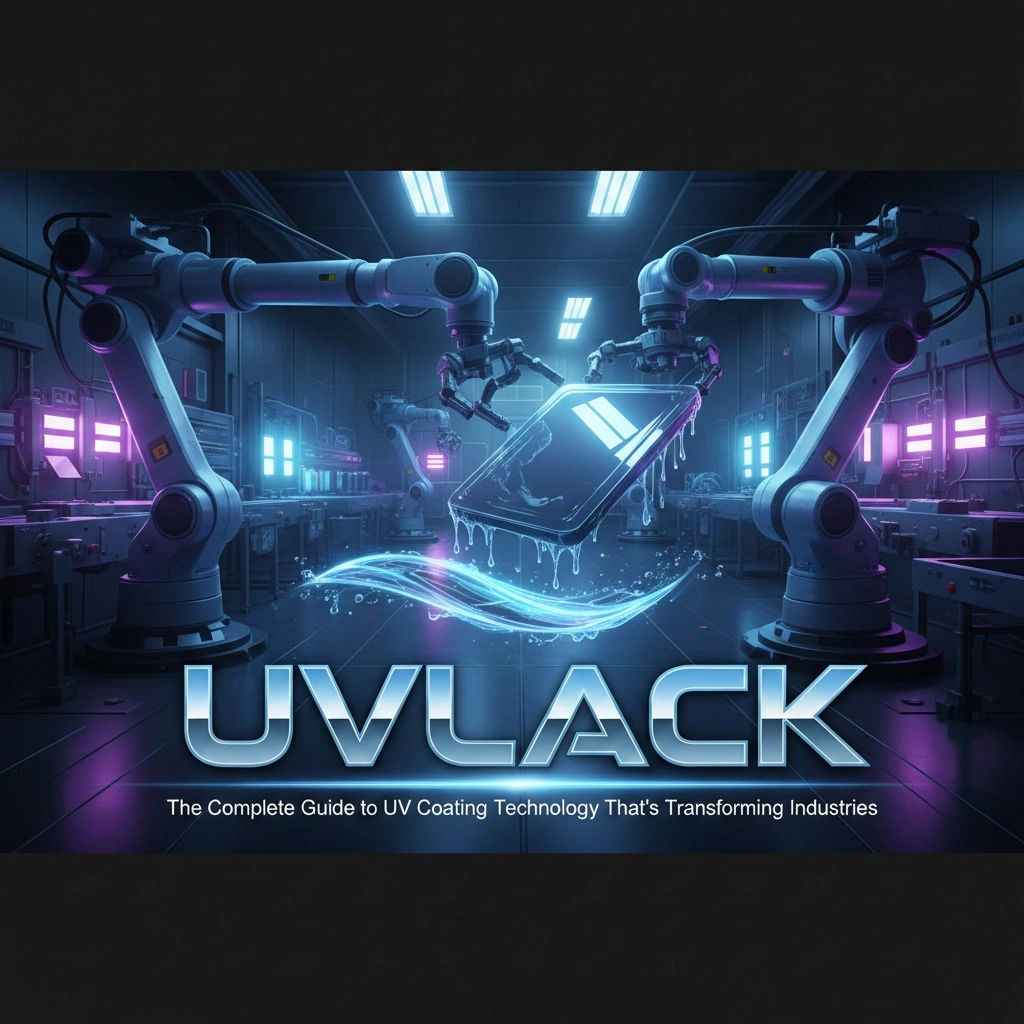
In the quest for coating solutions with a perfect blend of speed, durability, and eco-friendliness, UVLACK becomes the most remarkable innovation. The UV-curable coating technology has subtly transformed the surface protection and enhancement methods of the manufacturers in different industries—the furniture in your house to the mobile phone in your pocket.
So what is UVLACK really, and the transition of many companies to this technology is open for debate? Let’s dissect it and lay out every detail related to this captivating technology.
What Makes UVLACK Different from Traditional Coatings?
UVLACK is a game changer in surface protection technology. While conventional coatings depend on the slow process of air drying or heat curing that can take hours or even days, UVLACK by means of ultraviolet light alone, triggers an instant chemical reaction. In a matter of seconds, the liquid coating turns into a solid protective layer, which is surprisingly strong.
The science explains it all. During the time the ultraviolet light is shining on the coating, the photoinitiators present in the formula absorb that energy and get the polymerization process going. Liquid molecules quickly form a hard network by crosslinking, this results in a finish that is scratch-resistant, chemical-resistant, and beautiful—plus with no long wait times which would otherwise cause slowing down of production lines.
What surface protection technology is of concern to the environment, is its toxic waste profile. Solvent-based conventional coatings are constantly releasing VOCs which are organic compounds that easily vaporize into the atmosphere thus adding to pollution and causing health hazards for the workers. In contrast, UVLACK formulations contain either very low or no VOCs at all which makes their use not only safer for the manufacturers but a healthier option for the planet too.
The Real-World Benefits That Matter
When it comes to assessing coating options for your goods or projects, you will see the benefits of UVLACK at once. Production efficiency rises very high as there is no downtime for the coatings to dry. The manufacturer’s use of UVLACK allows them to switch to the next process instantly after UV curing, which usually lasts only 5 to 30 seconds depending on the method used.
The factor of durability is beyond argument. UVLACK-treated surfaces have a very high resistance to daily wear and tear. The usual scratches, scuffs, and chemical exposure that would damage traditional finishes hardly affect UVLACK, if applied properly, at all. Thus, the case for longer-lasting and less frequently refinished or replaced products is made.
Most of all, cost benefits come from different sources at the same time. The initial capital cost for UV curing systems, which are the main equipment, is indeed a considerable outlay. But with reduced material waste, lower energy consumption, and faster throughput, the upfront costs will soon be offset and might even become a day-to-day routine. Businesses are saying they see ROI within months of implementation.
Where UVLACK Makes the Biggest Impact
If you stroll through a contemporary furniture showroom, it is almost certain that you will come across UVLACK without even a hint of its presence. The mirror-like brightness of the wooden tables, the cabinet doors so smooth that they are indeed perfect, and the shining wooden floor—UVLACK not only gives such high-class looks but also protects the wooden surfaces from moisture, stains, and daily use.
The use of UVLACK has been adopted by the car manufacturing industry for the interiors. Parts made of plastics and coated with UVLACK such as trims on dashboards, parts of the center console, and door panels, even if they have been outside in the sun all the time, still look glamorous and new. Temperature fluctuations and cleaning products are not a threat for the coating as it is the gift of UV resistance that makes it work and this is the feature that keeps it the most advanced from the traditional ones that yellow and degrade over time.
The look of the electronics marketed that day would most probably not be without that of UVLACK. Laptop casings, smartphone covers, and speaker grills do not show fingerprints thanks to the coating while the consumers enjoy the clarity their eyes want. The thin layer of UVLACK does not add weight, which is a very significant factor in production where every millimeter is a matter of life and death.
Moreover, the printing and packing industry is no more limited in its imagination and design due to UVLACK. The Spot UV technique is a boon to the designer who wants to apply high-gloss coating to certain areas, thus creating a texture contrast that will draw attention to the branding elements. First-class product packaging is the one that utilizes this technique often to signal good quality at first sight.
Understanding the Application Process
The process of using UVLACK is not complex, however, it is necessary to have the right equipment and a proper technique. The surface needs to be cleaned and prepared very well, as any contaminating materials will affect the quality of the adhesion. The coating can be applied in different ways—using a roller coating for flat surfaces, where spray application can be chosen for complex shapes, or curtain coating for continuous production lines.
After application, the item with the coating is moved under UV lamps where the process takes place. Nowadays, LED UV systems are becoming more popular because they require less energy and produce less heat compared to the old mercury vapor lamps. Thus, UVLACK can be applied on heat-sensitive materials that otherwise could not have been subjected to conventional UV curing.
The thickness of the coating is of great importance. When it is too thin, it will not provide sufficient protection or will not be visible. When it is too thick, there is a risk of incomplete curing, or surficial tackiness being unwanted. The majority of applications are done with coatings between 10 and 50 microns, however, the requirements differ according to the type of substrate and intended use.
Making the Smart Choice for Your Needs
If you’re thinking about using UVLACK in your production process or for your product line, there are some practical issues to weigh up before making your decision. The first thing to look at is the volume of your production. High-volume operations gain most of the benefits from UVLACK’s quickness, but even small producers can warrant the expense if the quality and ecological concerns are in line with their brand values.
Next, think of the substrate materials you’re going to use. UVLACK has a perfect application on wood, most metals, several plastics, and paper-based products. On the other hand, perhaps some low-energy plastics will need to undergo a surface treatment prior to coating so that a good adhesion can be accomplished. Your supplier of coatings can support you in dealing with these technical matters.
Next, think about the type of finish you would like to have. Besides being ultra-high gloss that looks almost liquid, UVLACK is also capable of producing attractive mattes that feel like premium surfaces. The satin finish is between the two extremes and provides a soft light without the reflection of a mirror. What is chosen is entirely determined by the aesthetic aspirations and positioning in the market.
Key Takeaways for Your Next Steps
The technology of UVLACK provides remarkable benefits that, in turn, result in superior products and more efficient operations. The trio of instant curing, extraordinary durability, and eco-friendliness makes it harder and harder to justify the use of old-school coating techniques.
The first step for business firms that are keen on UVLACK is to find and reach out to specialized coating suppliers who can give a detailed account of the strengths and weaknesses of your specific situation. Get sample parts to measure the finish quality and durability from the point of view of real-world conditions. A lot of suppliers will permit a trial run on the production machine to show the feasibility of your plan before you are ready to commit to a full-scale finicky operation.
Though the learning curve is not too steep, proper training will guarantee that your team will be able to get the most out of the technology. Dedicate time to get the basics of lamp maintenance, coating viscosity, and quality control. These primary activities will make it easy and will guarantee consistent output.
As the global coastline of sustainability regulations becomes tighter and tighter, UVLACK makes your operation a head turner. The system is already compliant with or surpasses the environmental regulations in most locations, thus saving you from the need to indulge in costly retrofitting or changeovers in procedures afterwards.
What surfaces can be coated with UVLACK?
UVLACK sticks very well on wood, MDF, metals such as aluminum and steel, many types of plastic, glass, and paper-based materials. Special formulations have been developed for difficult substrates such as polypropylene or polyethylene, but these might need surface preparation treatments to improve adhesion. The coating supplier should be able to advise you on which formulation will be the most suitable for your particular material.
How does UVLACK compare in cost to conventional coatings?
The upfront investment in equipment is bigger because of the use of UV curing lamps and application systems, which usually are in the range of several thousand to tens of thousands of dollars depending on the production scale. On the other hand, the unit cost of the materials used is often equal to or lower than that of the traditional coatings. The main savings come from significantly decreased labor costs, slight waste production, lower energy use, and higher production volume. The majority of the companies reach the point of payback in 12 to 24 months.
Is UVLACK safe for food contact applications?
Certain UVLACK mixtures satisfy food safety criteria for indirect food contact, like packaging outside. For surfaces in direct contact with food, you will require particular formulations that are certified for that purpose, which generally entails the use of low-migration substances and adherence to either FDA or EU rules. In all cases related to food, please check the certification documents provided by your supplier.
Can UVLACK be applied over existing finishes?
In general, the applying of UVLACK would be directly on the surface instead of over the existing coatings which is the direct way of using it. Coating over previous finishes might not stick well or cause problems with the existing coating hence the process should always be done directly on the substrate. If the item to be coated was previously coated, the old coating has to be removed totally either by sanding or chemical stripping before the application of UVLACK.
What maintenance do UV curing systems require?
UV lamps lose their effectivity depending on the amount of time they are used, and this is the reason why they are replaced, in most cases, after 1,000 to 2,000 hours for mercury lamps, while LED lamps can last more than 20,000 hours. Keeping lamp reflectors clean is one of the ways to achieve maximum intensity. Cooling systems should be inspected from time to time in order to avoid overheating. The majority of manufacturers issue maintenance plans and offer assistance to ensure that their systems operate at peak efficiency.
Does UVLACK yellow or discolor over time?
The latest UVLACK formulations that utilize state-of-the-art photoinitiators along with aliphatic resins are capable of exhibiting remarkable color stability. On the other hand, the previous UV coating technologies would occasionally cause yellowing especially on white or light-colored surfaces, whereas the present-day products do not even change their appearance for years to come even when subjected to UV light. For critical applications, it is recommended that you inquire about the suppliers’ accelerated aging test results as a way of confirming the long-term color stability of the products.
How does UVLACK perform in outdoor applications?
The standard UVLACK formulations are suitable mainly for indoor applications or for those with limited exposure to weather. In order to achieve outdoor durability, the specialized UVLACK products intended for outside use are made with extra UV stabilizers and weather-resistant additives. These special mixtures are resistant to sunlight, moisture and temperature cycling much more than indoor versions. Usually, marine and architectural applications need these improved formulations to provide the expected lifespan.